D&G Product Replacement
Redesigning how customers choose replacement appliances when their insured white goods break down. 73% Fewer Complaints About Insurance Replacements.
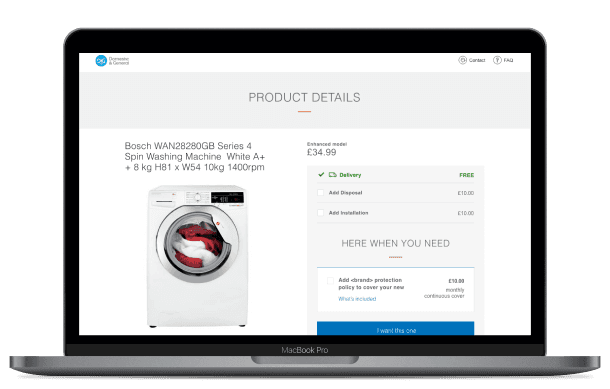
Project Overview
When a customer's white goods appliance broke beyond repair, Domestic & General offered three replacement options of similar value through their insurance. Customers complained that the options didn't match the monetary value of their original appliance, their preferred brand wasn't available, and the specifications were different. This drove many calls to the call centre.
I redesigned the entire replacement journey to offer a minimum of six like-for-like options plus six upgrade choices. The new system prioritised the customer's original brand where possible, showed detailed specifications, and let customers choose whether to upgrade with a one-off payment or add new insurance via direct debit.
The redesign reduced call centre complaints by 73% over six months, achieved an NPS of 55 and CSAT of 84, and freed up call centre agents to handle genuine claims issues instead of product selection queries. About 15% of customers chose to upgrade their appliance, generating a better customer experience. The project was shortlisted for two UX UK Awards in 2019.
Research
Understanding the Customer Journey
I conducted research through three methods: customer questionnaires, call centre observations, and interviews with call centre agents.
Sitting with agents revealed the most common complaints. Customers felt the three offered appliances didn't match the value of what they'd originally bought. They had strong brand loyalty and wanted the same brand if possible.
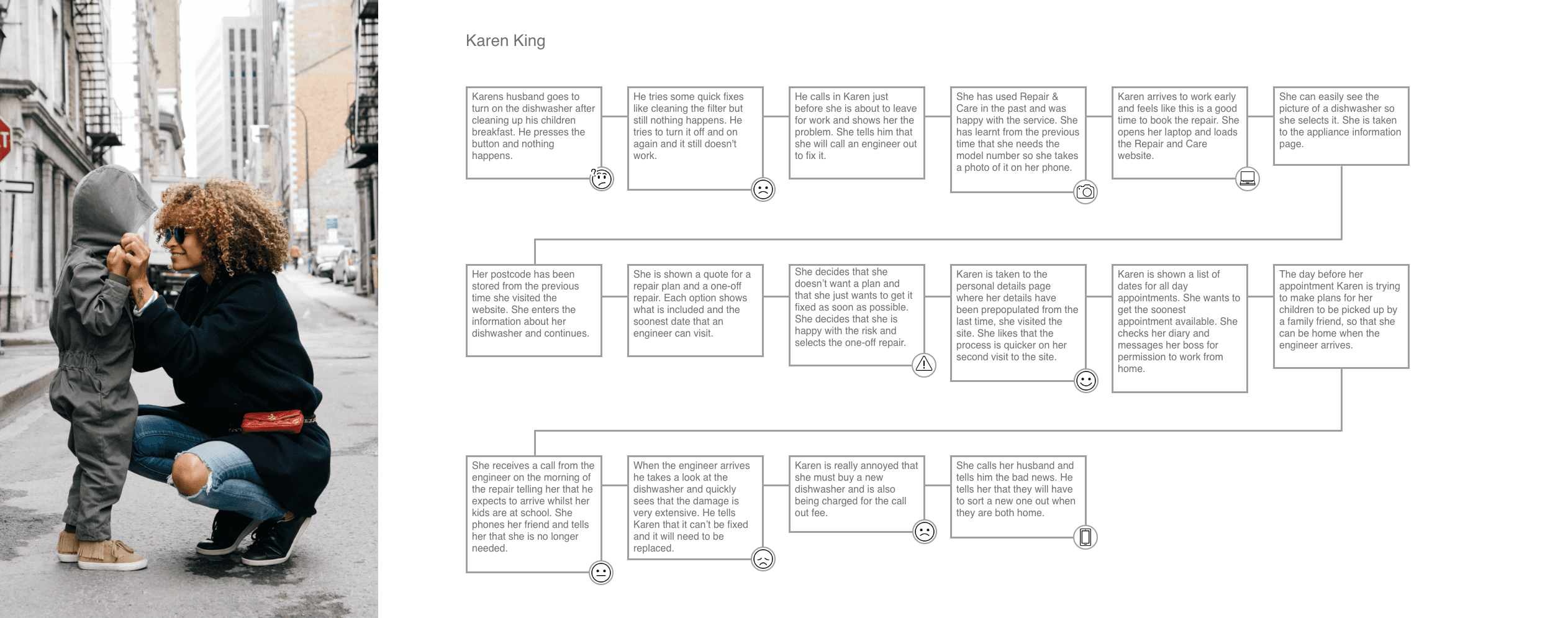
User journey mapping the replacement process from claim approval to product selection, highlighting frustration points where customers abandoned the journey to call the call centre
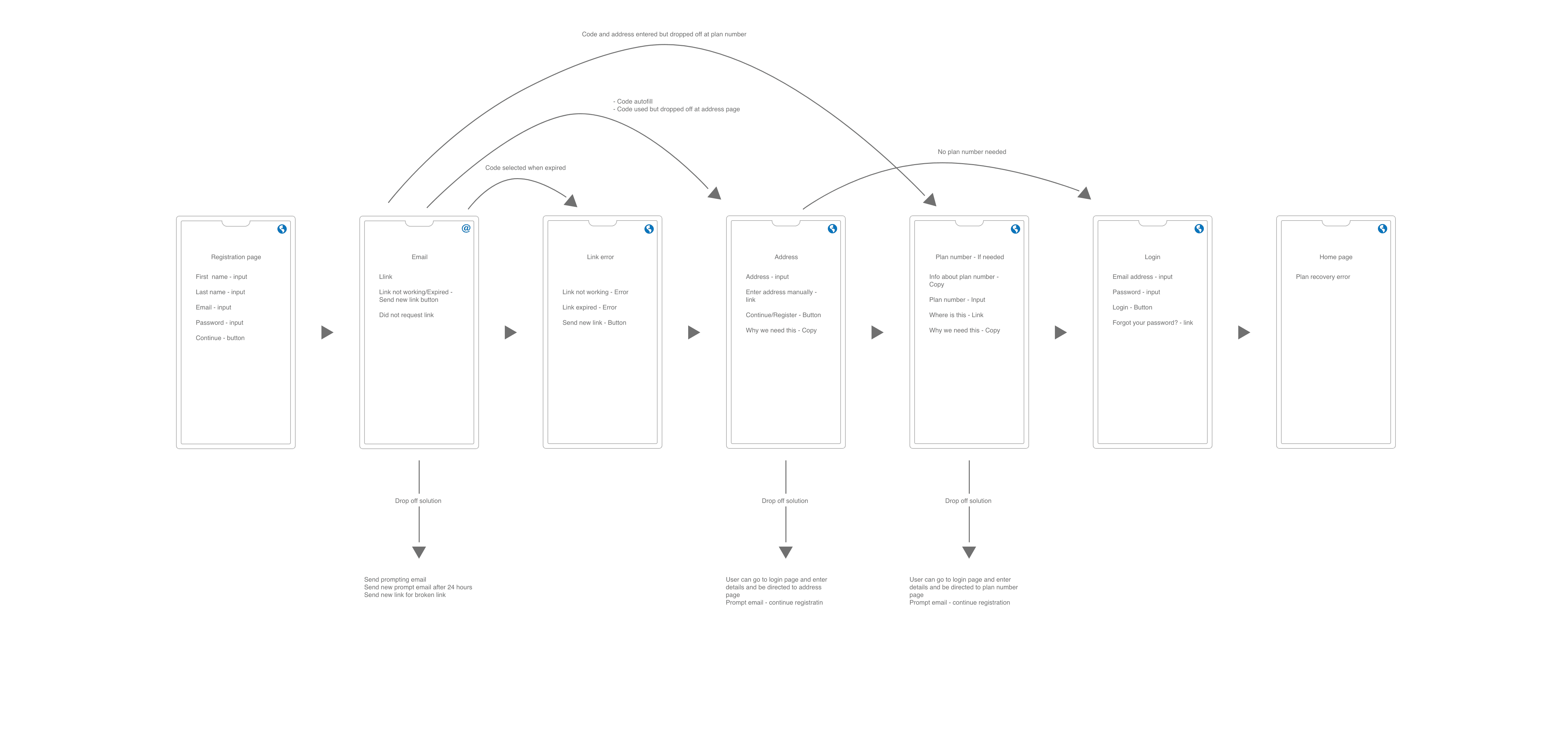
User flow analysis showing where customers exited the online journey to call the call centre, with primary drop-off points at product specification comparison and value perception stages
Key Research Findings
Limited choice created dissatisfaction
Three options weren't enough. Customers felt forced into a choice they didn't want.
Brand loyalty mattered more than expected
When their preferred brand wasn't available, they called to request alternatives.
Specification mismatches caused friction
When a smaller or less capable machine was offered, they questioned whether it was genuinely equivalent value.
Planning the MVP
Prioritising Features with Business Constraints
Working with the business analyst, I used the MoSCoW method to prioritise features for the MVP. The most difficult part wasn't cutting features but handling the different payment scenarios.
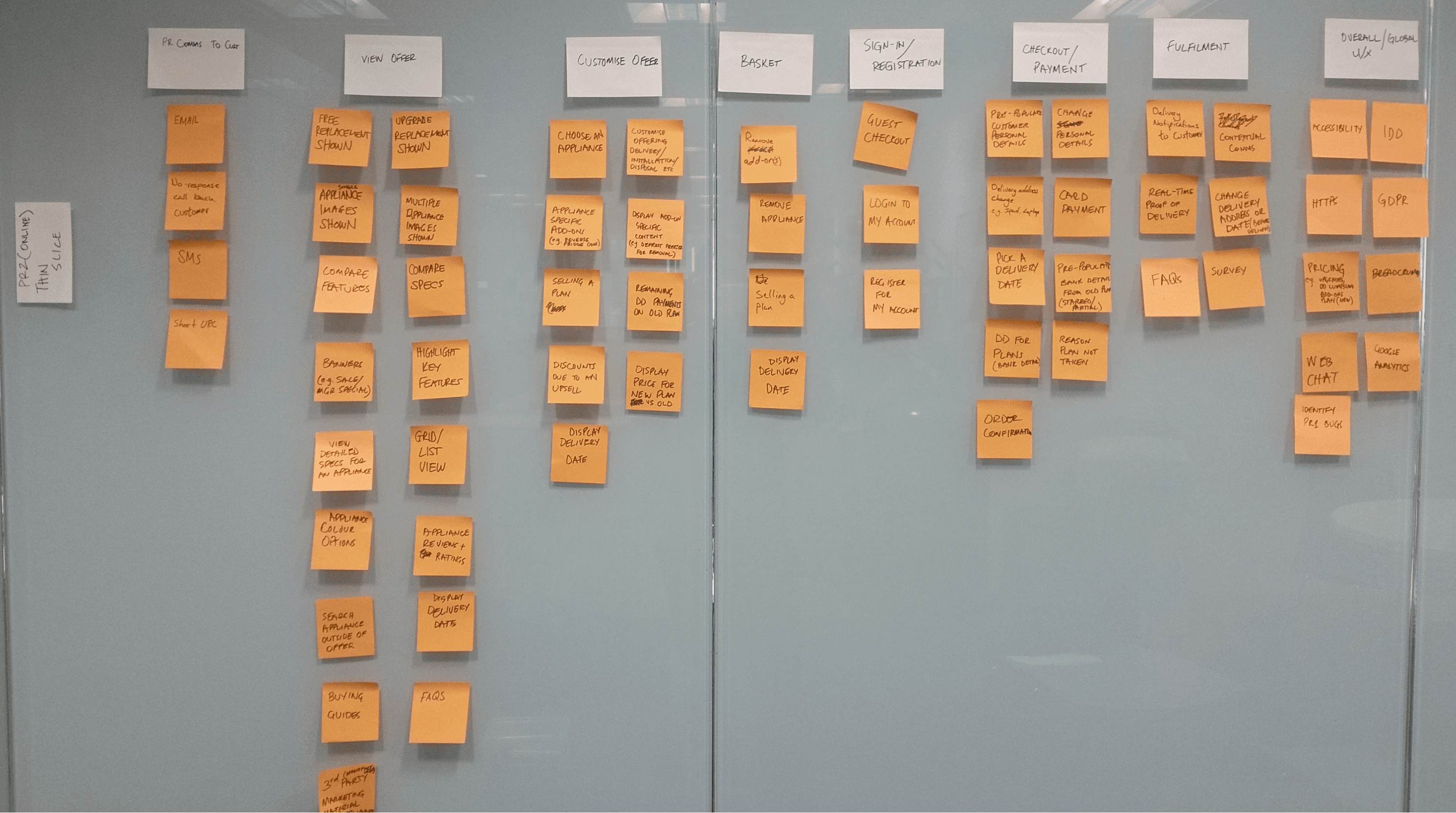
Feature prioritisation workshop with the business analyst using MoSCoW method to determine MVP scope, balancing user needs with technical constraints and development timeline
Design Decisions
Making Replacement Feel Like Shopping
The biggest challenge was making a strange transaction model feel familiar. Customers were receiving a free replacement appliance but could also pay to upgrade it.
Four Core Design Principles
Minimum of six like-for-like plus six upgrades
Instead of three forced choices, customers saw at least twelve options.
Specifications displayed prominently
Each product card showed capacity, energy rating, dimensions, and key features.
Modular payment flow
The payment journey adapted based on what customers selected.
Clear value communication
Every screen reinforced that like-for-like options were free replacements.
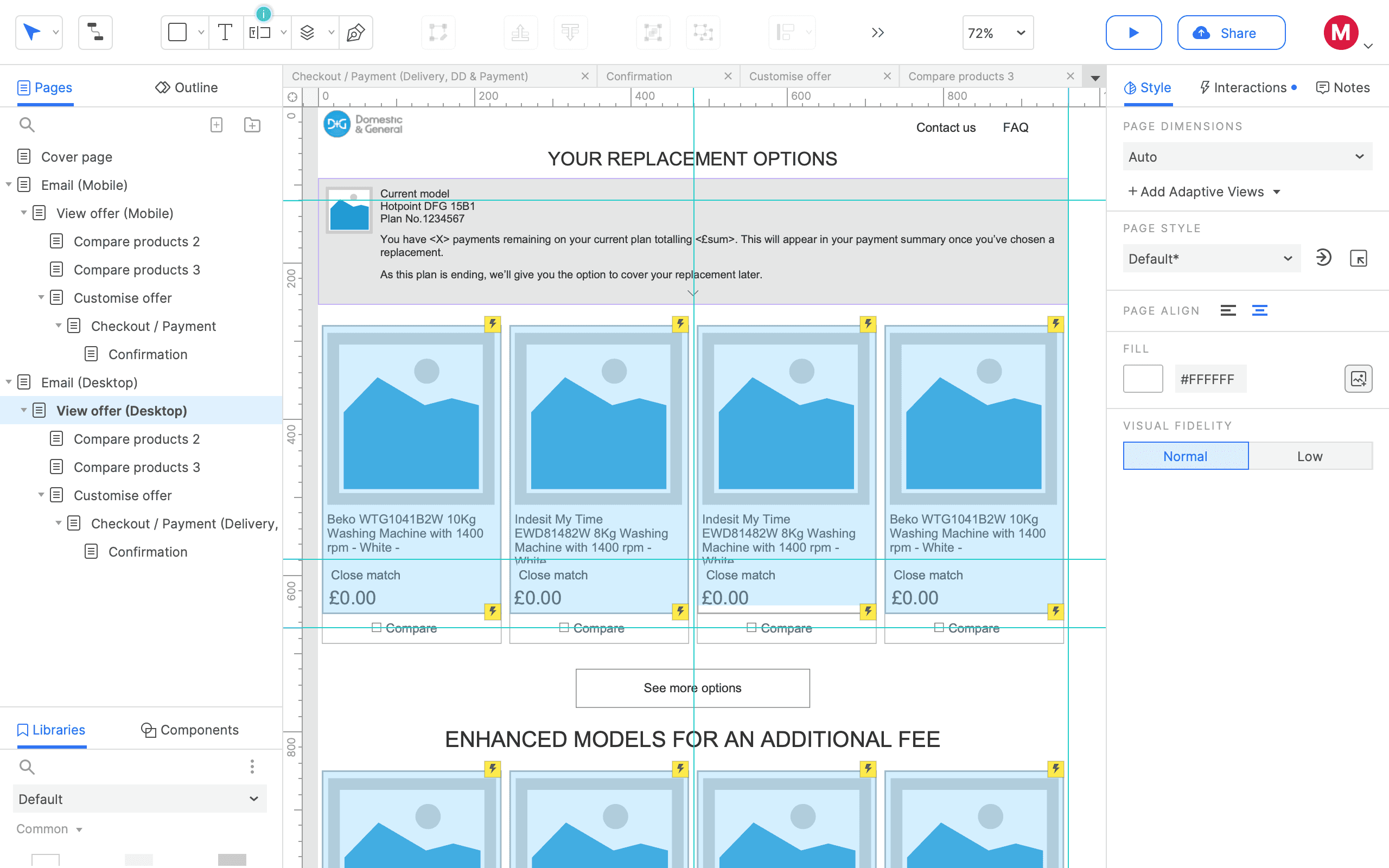
Early wireframes exploring how to present like-for-like and upgrade options side by side, testing different layouts for product cards, specifications, and value communication
Final Solution
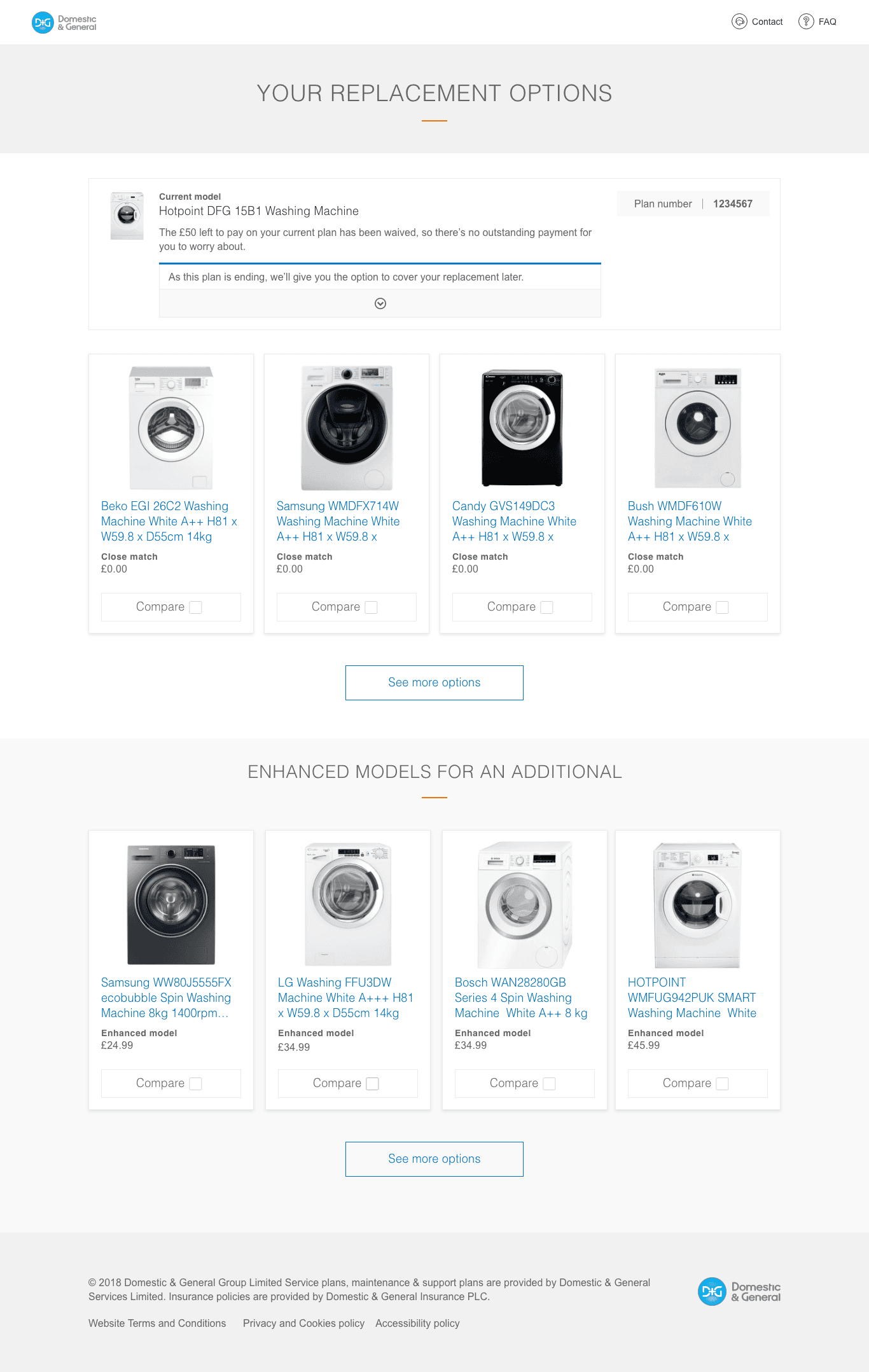
Final landing page design displaying like-for-like replacement options (top section) and upgrade options (bottom section), with clear specification details, brand visibility, and pricing transparency
A Shopping Experience That Reduced Complaints by 73%
The final design displayed replacement options in a familiar product grid. Like-for-like options appeared first, showing appliances that matched the customer's insurance value at no cost. Upgrade options sat below, clearly labelled with the additional payment required.
Each product card showed the appliance image, brand, model, key specifications (capacity, energy rating, dimensions), and price. Customers could compare options at a glance without needing to call for more information.
73%
Reduction in complaints
15%
Chose to upgrade
84
CSAT score
Modular Payment Journey
The payment flow adapted based on customer choices. If they selected a like-for-like replacement with no insurance, the journey was short: confirm the address and complete. If they chose to upgrade and add insurance, the flow guided them through the one-off payment first, then the direct debit setup for insurance. This modular approach handled every payment scenario without overwhelming users.
Results
The redesign launched in 2019 and achieved measurable results within six months. The expanded choice and clear specifications meant customers could find what they wanted without calling. Call centre agents reported that the freed-up time allowed them to focus on helping customers with genuine claims issues.
The hypothesis that customers would pay for better options proved correct, with 15% choosing upgrades, resulting in a better customer experience. Customer satisfaction improved significantly compared to the previous system.
The project was shortlisted for two UX UK Awards in 2019: Best Transactional Experience and Best Effect on Business Goals.
Key Success Factor
The key to success was treating the replacement journey like a shopping experience. Customers understood the model immediately because it felt familiar, even though the transaction (free replacement with optional upgrade) was unusual. The modular payment flow solved the technical constraint of working with an existing backend system while keeping the experience clear for users.